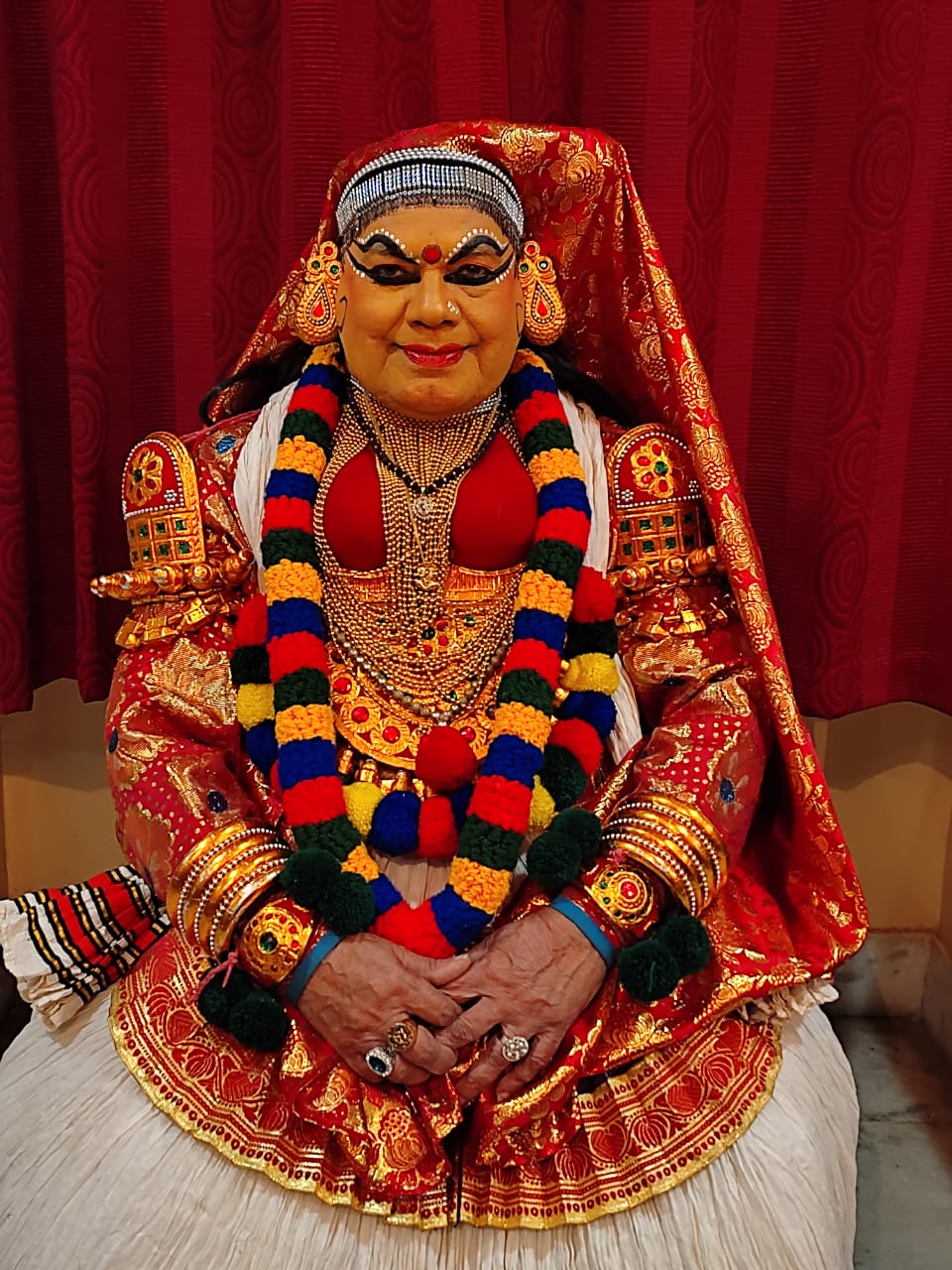
Pacha
The GreenThe noble and divine — gods, kings and virtuous heroes such as Krishna and Arjuna. Green signifies sattvic balance and righteousness.
To understand the maestro is to understand his art — a four-century-old tradition of story, rhythm, colour and devotion.
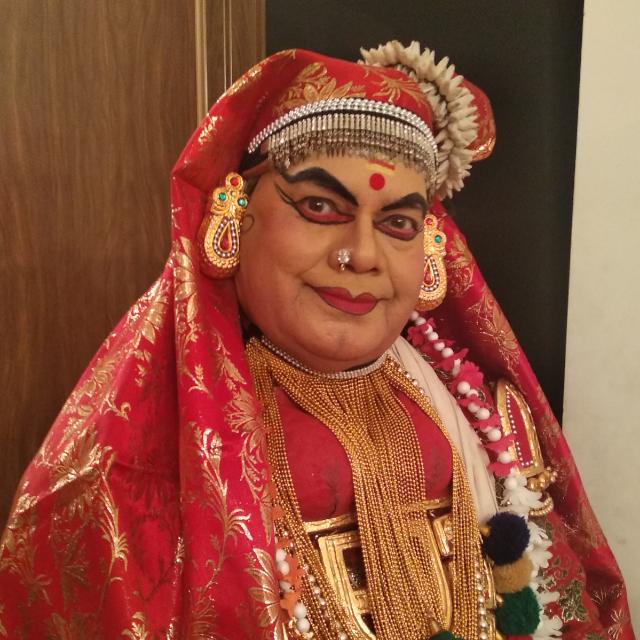
Kathakali — literally "story-play" — is the grand classical dance-drama of Kerala, taking recognisable form in the seventeenth century. It weaves together nritta (pure dance), nritya (expressive gesture) and natya (drama), drawing its stories from the Mahabharata, Ramayana and the Puranas.
Performers do not speak. The entire narrative is carried through a precise vocabulary of mudras (hand gestures), a virtuosic command of navarasa (the nine emotions) expressed through the eyes and face, and the thunderous rhythm of the chenda and maddalam drums — all sung by vocalists in the sopanam style.
The Kalluvazhi chitta is the school of Kathakali codified at Kerala Kalamandalam and prized for its architectural precision — the geometry of stance, the discipline of rhythm, and an unhurried clarity of expression. It is this lineage that Kalamandalam Sankaranarayanan absorbed under the maestros of the "Golden Era," and which he has spent a lifetime transmitting — from the gurukulas of Kerala to the classrooms of Santiniketan.
Character types are read instantly through colour and costume. The towering crowns, voluminous skirts and the rice-paste chutti frame transform the performer into the divine, the heroic and the demonic.
The noble and divine — gods, kings and virtuous heroes such as Krishna and Arjuna. Green signifies sattvic balance and righteousness.
The anti-hero — proud, valiant but flawed kings such as Ravana and Duryodhana, marked by red knife-shapes on a green ground.
Beings of force — divided into red (chuvanna), white (vella) and black (karutha) beards denoting the fierce, the divine and the savage.
The gentle and refined — women, sages and brahmins, rendered in soft luminous tones. A vesham of grace rather than grandeur.
Sankaranarayanan's distinct contribution lies in transmission beyond Kerala. He embedded Kathakali in the curriculum of a major national university, trained non-Malayali students to professional standard, and brought Bengali pupils to Kerala Kalamandalam itself.
His pioneering synthesis of Kathakali biomechanics with Tagore's Rabindra Nritya created a pedagogy unique in Indian dance — and he remains a scholarly authority on Kerala mural arts and chutti patterns.
Meet the guru →